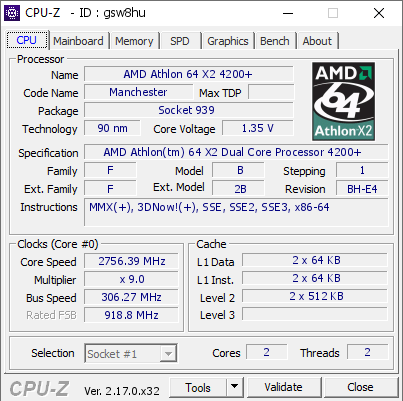
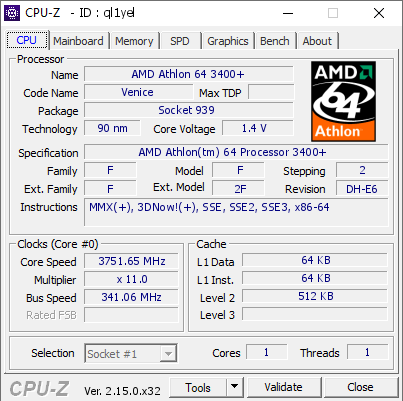
In general it seems that AMD assumed a divider and calculated the real ram clock off it by rounding. Ram clock on A64 is derived from cpu clock anyways, so different cpu multiplier will inevitably change the applied ram divider and thus the resulting ram clocks. AMD would've been better off to just state the real ram divider in the bios... (like /11) Their "guess" of /200 /183 etc is just annoying.
I'd assume that AMD tries to match the desired ram speed as close as possible, but will always select a divider which doesn't exceed the desired frequency. So if the resulting clock of a divider ist just a tiny bit above the expected value, the cpu will always select a bigger divider and thus lower the real clock below the threshhold. So if for example a /14 divider will result in 135Mhz DDR (at 200Mhz HT!) , but a 133 divider was selected, then the cpu will use /15 instead and underclock the ram. This happens for example at cpu multi 9.5x with /143 (real: 135Mhz) and /133 (real: 126Mhz) and /125 (real: 118Mhz).
Well, in fact AMD's "guess" on the memory clocks is not a guess, it is absolutely perfect. The flaw is in the way it is presented to the user. Years ago I stumbled upon the same issue when overclocking my (rest in peace) trusty 4400+ with 8 gigs of RAM.
I noticed, that there is some very simple logic behind the memory dividers and that you can calculate Oskar Wu's table completely in Excel. Did this now within 5 minutes ;-)
The deal is to know the "real" memory dividers, which are in fact "rational numbers", a fraction of two natural numbers, where the second number, the divisor, is always 3. Yeah, I know, I'm getting a bit mathematical in here.
Anyways, the true mem dividers are as follows:
| Mem Divider shown in Bios | Base Number of Fraction | Real Mem divider (Base / 3) |
| 100 | 300 | 100 |
| 125 | 375 | 125 |
| 133 | 400 | 133,333333333333333333333333333333333... |
| 143 | 430 | 143,333333333333333333333333333333333... |
| 150 | 450 | 150 |
| 166 | 500 | 166,666666666666666666666666666666666... |
| 183 | 550 | 183,333333333333333333333333333333333... |
| 200 | 600 | 200 |
| 216 | 650 | 216,66666666666666666666666666666666..... |
| 233 | 700 | 233,333333333333333333333333333333333.... |
| 250 | 750 | 250 |
So if you want to know the real memory clock when using the 133 divider, use 400/3 instead for an absolutely matching solution.
The odd thing is the 143 divider, which is a bit off with a base of 430. Maybe this is a historical residue out of SD-RAM times. I've never seen this divider with a revision E6 CPU.
The last three dividers don't seem to work, although present in the latest BIOS of my A8N32-SLI deluxe. Those are always interpreted as a 200 mem divider, no upclocking is possible.
As file attachement there is my Excel 2016 spreadsheet with all formulas and dividers, replicating the Oskar Wu mem divider table.
Thanks for reading

[Edit]
There are some other limitations to consider.
Minimum dividers: as Oskar Wu noted, the minimum mem divider is 5, not 4.
Since some revision ( I think E4?) the minimum CPU divider is also 5, not 4. You may be able to set it via RMclock in windows, but the system will hang or crash.