Haldi
Enthusiast
- Mitglied seit
- 10.06.2012
- Beiträge
- 1.050
Follow along with the video below to see how to install our site as a web app on your home screen.
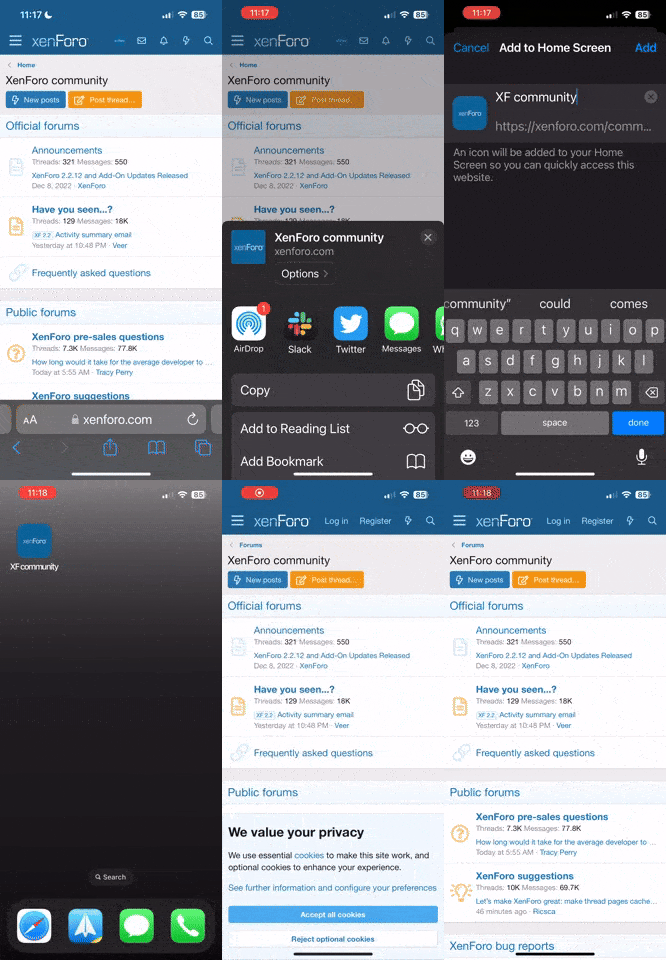
Anmerkung: this_feature_currently_requires_accessing_site_using_safari


v6.5.18 (Disk State, Power & Temp History)
Many new features, thanks to the community:
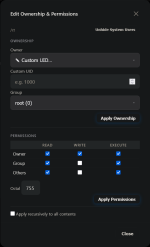
- HDD/SDD Power State + Full history and temperature (in the performance —> pool section). #128
- Cache Disks are now included in the ZFS-in-use tables. #127
- Introduction of web session persistence & configurable timeout (from setting —> security)
- Improved relay mode: Multi servers Activity View and Alert View
- Multi server in-app notifications. Interlink servers can push you visual notification (settings —> notifications —> in-app)
- More progress on the coming non-stable branch

 )
)
Und das ist normal, auch für z.B. TN ES oder ZFSNAS? Meine Hoffnung ist ja, dass so ein Verhalten von den beiden genannten ebenfalls abgefangen wird, ohne dass man da noch eingreifen müsste. Wenn das aber nicht der Fall ist, ist ein Verweis auf deine Lösung vielleicht sinnvoll.dass im "normalen" Zustand immer min. eine Festplatte geweckt wird.
Sollte eine Festplatte trotz des Scripts alle 30 Minuten grundlos aufwachen, liegt das meist an den Standardabfragen des SMART-Daemons.
1. /etc/smartd.conf öffnen:
Code:sudo nano /etc/smartd.conf
2. Die Zeile DEVICESCAN suchen und um den Parameter -n standby,q ergänzen:
Code:DEVICESCAN -d removable -n standby,q -m root -M exec /usr/share/smartmontools/smartd-runner
3. SMART-Daemon neu starten:
Code:sudo systemctl restart smartmontools

@o$$!ram Es gibt natürliche exogene Faktoren, wie eine SMB Freigabe für Proxmox, die dann jegliches Einschlafen verhindern. Ist zumindest interessant, dass millenniumpilot dem Anschein nach (noch) keine Probleme hat.
Mich würde auch mal interessieren, HDD im selben Rechner wo PVE läuft, wo aber PVE nirgends einen Bezug zur HDD hat und diese quasi nur von ZFSNAS verwaltet wird. Standby or no Standby...
PS: history of the state is not simple since our graphs are all timeseries (numbers in time) values.